


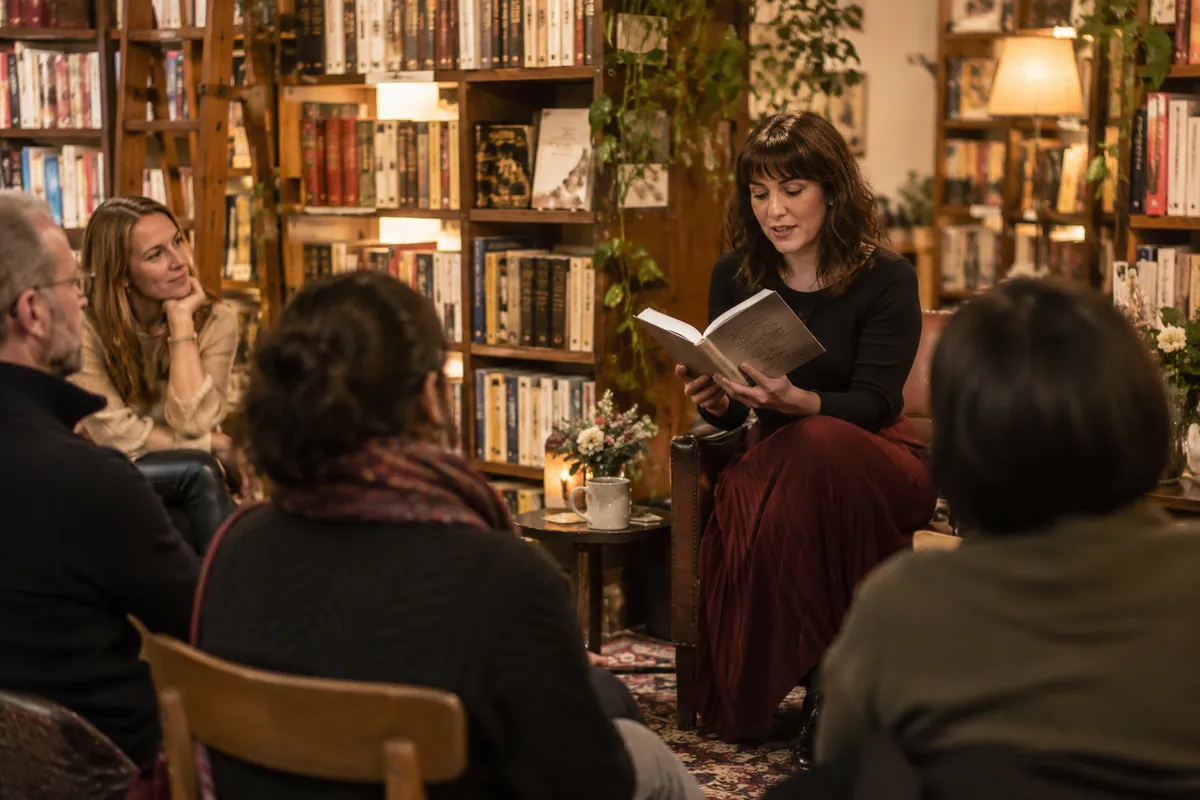
Select coherent passages
Choose extracts that listeners can understand without the missing chapters. Test transitions and pronunciation aloud. Keep the author, translator and edition identifiable so the selection can be discussed accurately with the venue.
Agree on the format
Describe audience age, number of readers, proposed length and equipment. Decide whether discussion follows the reading. Ask the organiser about space, sound, access and responsibilities rather than assume that the shop can provide everything.
Check intended permissions
Discuss the text and the exact planned use with the relevant rights holder or organiser. Recording and online distribution need their own consideration. Possession of a copy or a bibliographic reference does not establish permission for every public use.
Prepare information and rehearsal
Confirm the address, date, booking arrangements and access information before publication. Rehearse in the space where possible and test audibility. Allocate time for introductions, transitions and discussion when agreeing the total event length.
Keep the edition consistent
Use a common translation and identify page references for each reader. Check that the excerpts match the agreed selection. A catalogue helps locate the publication; it does not certify performance rights or validate the venue’s arrangements.