


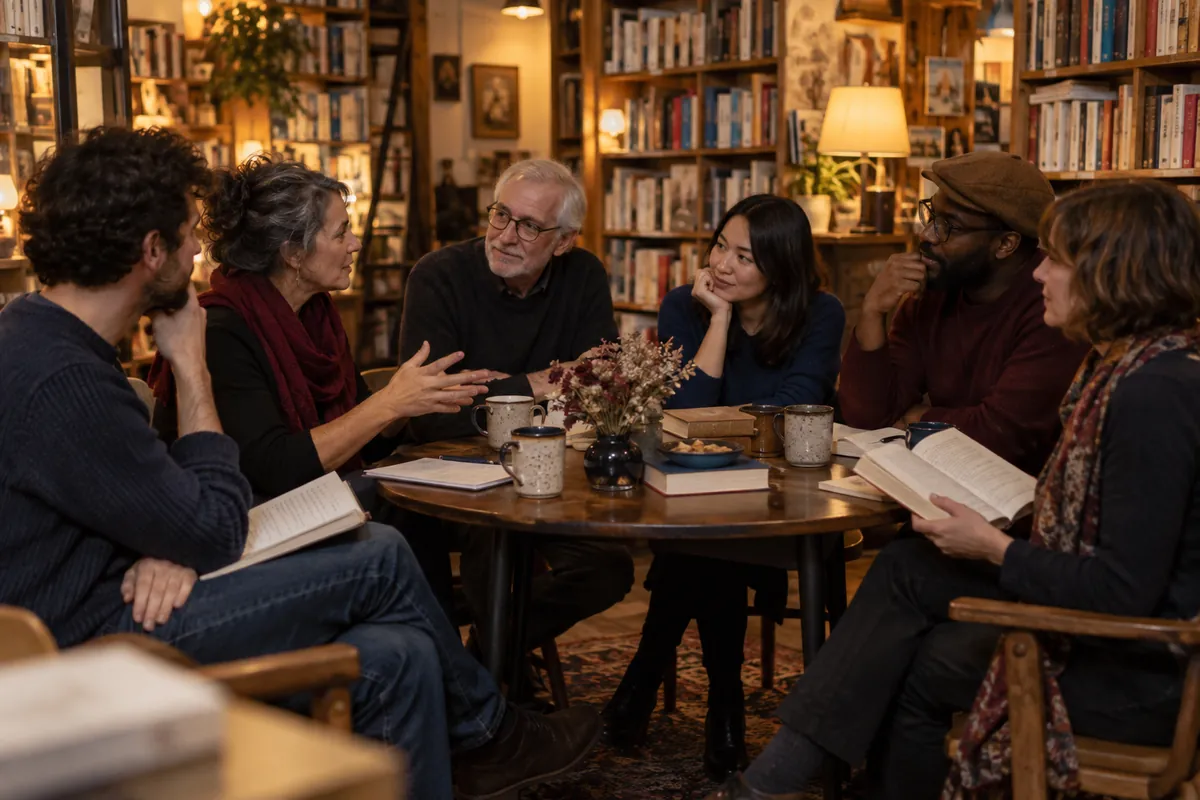
Define the invitation
State audience, frequency, duration and intended kinds of books. The group can focus on a theme or alternate freely. Explain whether finishing is expected and whether incomplete readers can attend. A clear invitation helps participants understand the shared activity without excluding every unexpected discovery.
Choose a sustainable rhythm
Allow time to obtain and read the book. A regular day and announced duration make planning easier. Account for holidays and share several dates in advance. Consistency may matter more than frequent meetings; an overly ambitious schedule can exhaust both organisers and readers.
Select titles fairly
Consider a short-list vote, rotating suggestions or a themed season. Check availability, price, length, format and access needs. A bookshop may suggest alternatives or arrange an order, but purchasing there should not become an unspoken requirement. Vary the selection where it serves the group’s interests.
Prepare open questions
Start with overall impressions, then consider characters, structure, language, themes and memorable passages. Ask what surprised readers instead of implying one correct answer. Prepare a few prompts while leaving room for the discussion’s direction. Announce in advance whether the entire plot, including the ending, will be discussed.
Share the conversation
An optional brief opening round can help people join in. Invite quieter participants without forcing speech and tactfully limit long monologues or side conversations. Disagreement is useful when it refers to the text and respects other reading experiences. The facilitator supports exchange rather than delivers a verdict.
Finish with a useful record
Confirm the next title, date and place. A short recap is usually sufficient; do not publish names or photographs without appropriate permission. After several meetings, ask about duration, group size, preparation and selection. Adjust the framework when it no longer supports the activity.
Agree on discussion rules
Set timing and a way to take turns. Start with questions accessible to unfinished readers, then clearly announce plot revelations. Rotate facilitation if the group wishes. Book-club examples described by the CNL can suggest possibilities, but adapt them to participants and practical availability.