



Find the official announcement
Check the bookshop’s own website or published channels for date, time, exact address and speakers. Several branches can create confusion. Events may move or be cancelled, so recheck on the day. A general reading programme does not confirm a particular signing session.
Understand entry arrangements
Some events are open; others require free or paid booking. Capacity, audience guidance and purchase conditions differ. Do not assume signing follows discussion. Ask ahead about entry, seating and assistance if these determine whether the visit will work for you.
Arrive considerately
Allow time to find the location, check a reservation and take a place without interrupting. Small spaces may fill. If unable to attend a fully booked event, use the organiser’s cancellation route so another reader may attend. Follow the published start and admission arrangements.
Join the discussion
A brief question about the book is easier to share than a long personal account. Listen to the facilitator and leave room for other readers. Attending without speaking is also valid. Ask before recording or photographing, especially where other participants appear.
Prepare signing requests
Check whether previously owned books are allowed, how many copies can be signed and whether purchasing on site is required. Prepare a recipient’s name accurately. Keep the exchange brief where a queue forms and respect the limits announced by the organiser.
Continue the discovery
Note authors, titles and publishers mentioned. Explore the associated selection or ask for a related recommendation afterwards. If interested in future events, use the shop’s own programme channel. An old announcement is not a timetable for the next meeting.
Choose an open question
A passage, character decision or documentary research choice can provide a focused question. Book-club discussions may inspire preparation. Ask about the author’s process rather than demand confirmation of your own interpretation. Keep practical attendance details grounded in the organiser’s announcement.
Read with a light purpose
You need not finish an entire work to discover an author. Read a publisher summary, authorised excerpt or a few pages and note a curiosity. Identify edition or translator where relevant. Avoid relying on an isolated quotation whose context and provenance you do not know.
Leave space for the answer
Prepare concise questions about a writing decision, research or difficulty. Let the author answer and others participate. If you have not finished reading, ask the facilitator whether plot details will be discussed instead of interrupting each contribution. Different levels of preparation can coexist when expectations are clear.
Distinguish discussion, signing and archive
A discussion focuses on a subject or book; a signing follows a different format. Videos and podcasts may document past events. Le Failler and Dialogues distinguish schedules from recordings, helping you prepare each activity separately.
Read the chosen session’s date, location, format and conditions. An author page or old episode does not announce a new visit or register you for one.
Check the session’s exact location
An event may take place away from the sales area. Mollat describes public events at Station Ausone. Dialogues has several addresses for different activities, so its name alone does not locate a session.
Note the address on the event page and your registration message. If combining a collection with an event, check both reception points. Do not assume a walking distance or transfer time without studying the actual route.
Use recordings to prepare a question
A podcast or video can clarify a reading topic and help shape a precise question. Les Volcans and Dialogues offer these resources alongside their schedules. Listen for a character choice, research method or publication context.
Keep questions short, open and connected to the work. Separate an earlier talk from the book discussed in a new session. An archive supports understanding; it predicts neither the exact discussion nor the speaker’s availability.
Read a signing photograph as a dated document
The photograph of Michel Serres at Le Failler on 15 February 2011 documents a past visit to Rennes. Its date and caption explain what it establishes; it does not show a current scheduled event.
For an outing, use a dated announcement and its admission rules. For an archive, note place, date and creator. This distinction lets you appreciate a shop’s literary history while planning from information relevant to your chosen day.
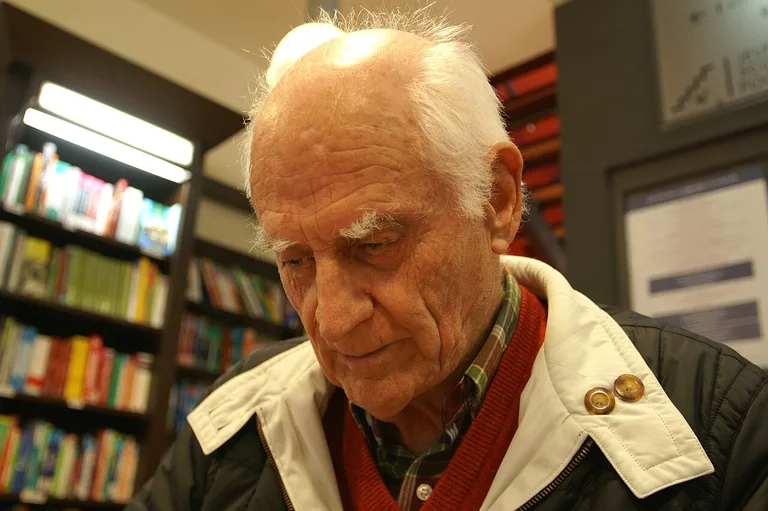
© Pymouss · CC BY-SA 3.0 · Source and original

Converted to WebP; display cropping is possible. This photograph does not confirm the current appearance of the premises.
Archive photograph of a past event, unrelated to the current programme.