

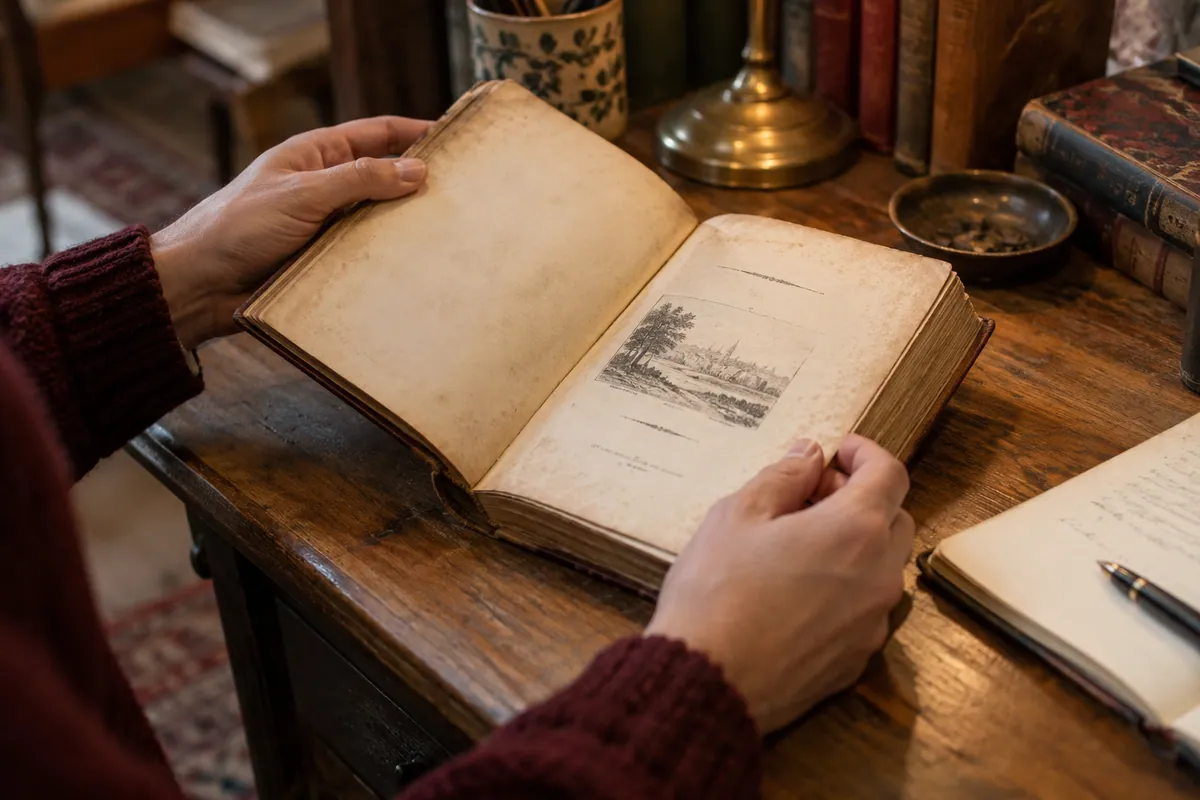

Distinguish editions
The same title can appear in paperback, larger format and large print. A series name does not guarantee identical text: an edition may be abridged, annotated or divided into volumes. A catalogue record helps check publisher and features. Record the ISBN for the actual object you want.
Try real reading
Browse middle pages in lighting similar to the intended environment. Compare letter form and size, spacing, line height and paragraphs. A layout comfortable for one reader can be tiring for another. Do not choose solely from an advertised point size; the reading sample matters.
Assess handling
Larger type can mean more pages. Compare weight, opening, binding flexibility and show-through from the reverse of the paper. Handling matters alongside text size for long reading sessions. Ask whether the work is divided into volumes or available in a lighter format.
Consider alternatives where useful
Audio, adjustable digital text or a specifically adapted edition may suit some needs better. Devices, access and catalogues differ, so these are not automatic substitutes. For another reader, ask what they already use and prefer rather than choose a new device-dependent system without discussion.
Confirm the reference
This directory lists establishments, not their accessible-format stock. Give title, author, publisher and ISBN so the bookseller can check the specific version. For an uncertain reference, compare a bibliographic record and ask for confirmation before paying. The existence of an edition does not prove immediate availability.