


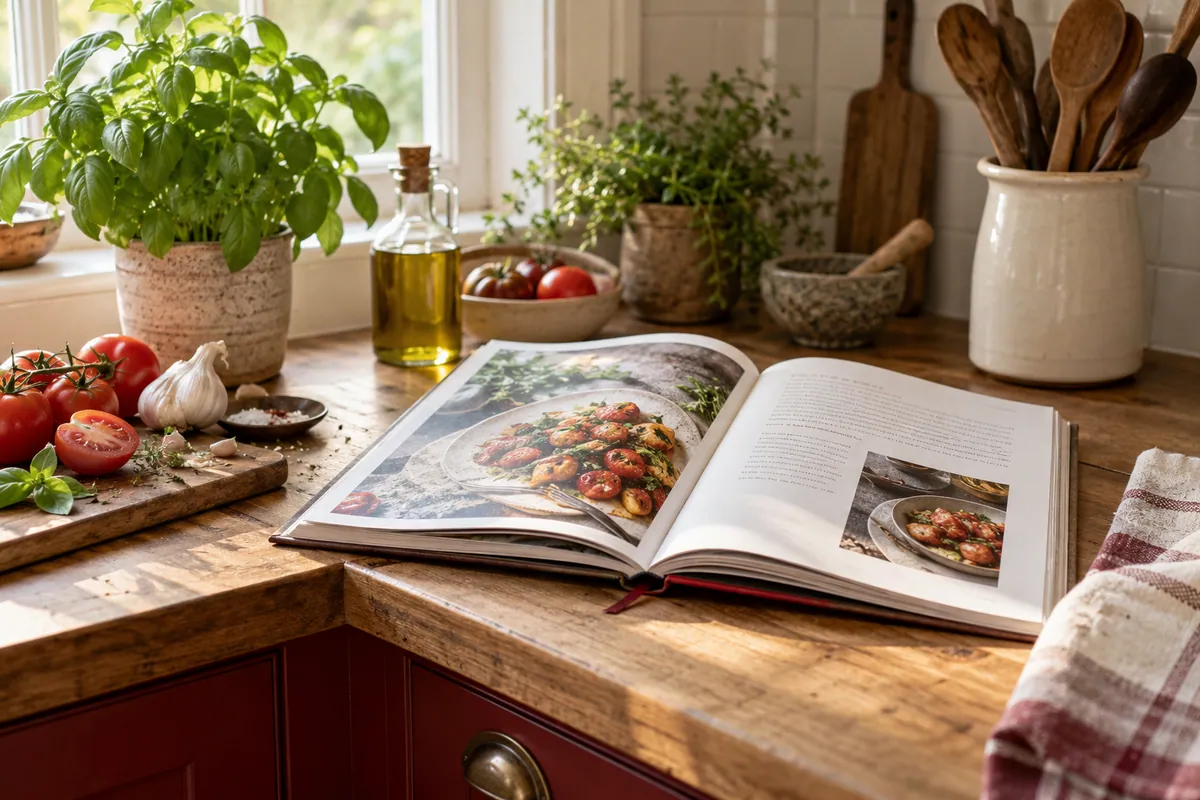
Describe your kitchen
Specify the number of diners, available time, equipment and accessible ingredients. Weekday meals and a baking project have different needs. Tell the bookseller these constraints when seeking a practical recommendation.
Follow the instructions
Read a short recipe, a longer one and one that particularly interests you. Check that ingredients appear in the steps and unfamiliar techniques are explained. Distinguish active preparation, cooking and resting time where the book provides them.
Compare quantities and equipment
Inspect units, portions, pan dimensions and utensils. Reducing a recipe does not always work by simple division. Check that the book stays readable and usable in your workspace when your hands are occupied.
Examine substitutions
Look for alternatives and their effects on the recipe. Where an exclusion is essential, inspect each recipe and actual ingredient information. Culinary inspiration does not replace professional advice for an individual medical need or allergy.
Separate inspiration and instruction
Photographs may show elaborate presentation while the steps describe a simpler preparation. Compare technique explanations, index, menus and recipe coverage. Request the exact edition of a previously tested book because revisions can change its contents.