

Keep conditions stable
Avoid rapid temperature or humidity changes, radiators and unsuitable damp storage. Leave space from cold or wet walls. Watch seasonal changes, condensation, new marks and odours. A sealed unused space is not automatically better than an appropriately maintained room.
Limit prolonged light
Direct sun can fade bindings, affect paper and heat shelves. Position books away from its path or reduce exposure appropriately. Normal reading light is different from prolonged display exposure. Rotate displayed objects where useful and consider their location rather than assume darkness is necessary for ordinary use.
Store without strain
Support ordinary volumes upright without tight compression. Consider small horizontal stacks for large heavy books. Move adjacent books slightly and grasp a volume’s body instead of pulling the top of the spine. Stable bookends can support incomplete rows without excessive pressure.
Dust carefully
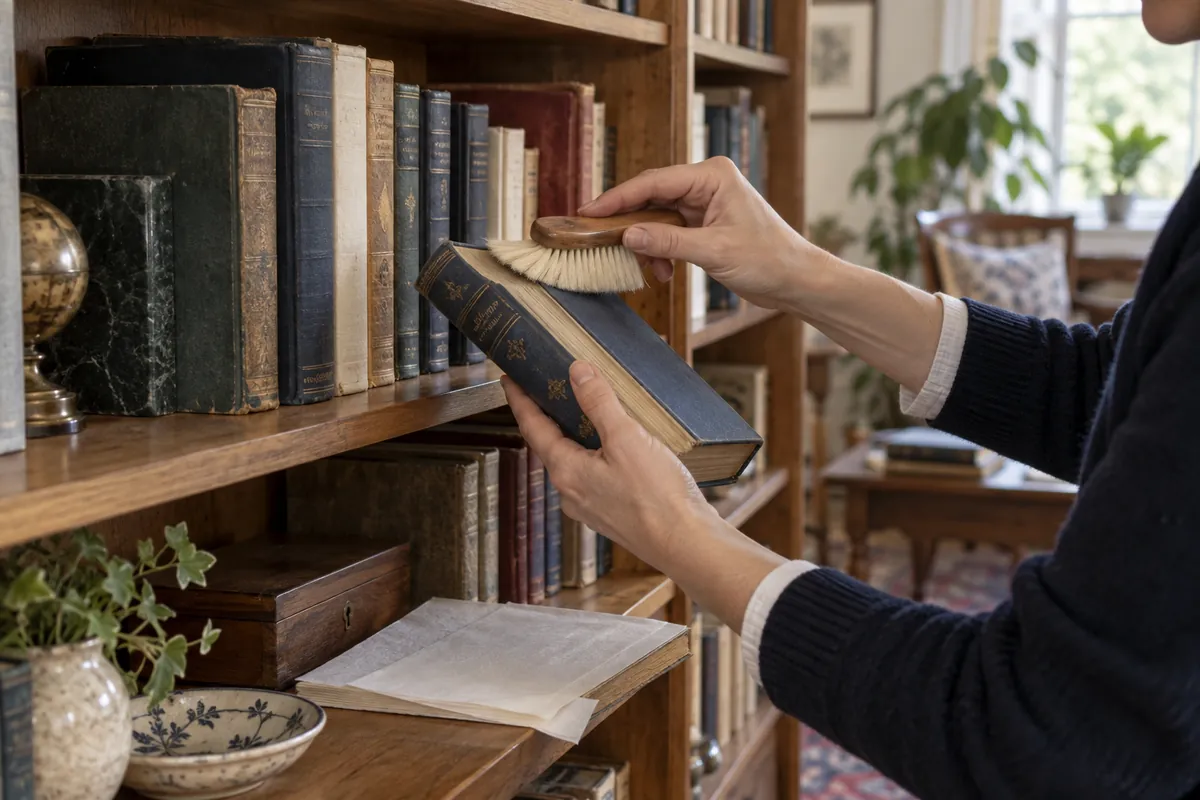
Use clean dry hands and keep an ordinary volume closed while gently removing surface dust with suitable soft materials. Avoid applying water, household cleaners, oils or perfumes to paper and binding. Fragile or valuable objects may need advice before even routine intervention.
Recognise warning signs
Damp pages, unusual deposits, mould-like odours or insect damage need attention. Avoid spreading a problem to other shelves, photograph the condition and seek a conservation professional for important items. Do not use improvised chemical recipes or treat an uncertain substance as harmless dust.
Choose appropriate protection
Fragile documents may need conservation-grade enclosures. Ordinary plastic is not automatically suitable and can create unwanted conditions. Store purchase and provenance evidence separately in appropriate materials. A well-fitted box can reduce light and physical stress without forcing a rare book’s binding.
Separate maintenance from repair
Dusting and shelving do not repair brittle paper or a broken binding. Do not experiment with household tape, glue or cleaning products on a valuable volume. Document damage and obtain appropriate professional advice. Preventive care begins with environment and handling, not an untested restoration recipe.